
Both Coates and Williams are of black African ancestry, but they disagree about the proper attitude blacks and whites ought to have about the resurgence of racism and white supremacy under President Donald Trump.
Coates, who writes in despair of reaching racial justice in this country any time soon: "Whereas his forebears carried whiteness like an ancestral talisman, Trump cracked the glowing amulet open, releasing its eldritch energies." (Translation: Trump has re-legitimized bigotry.)
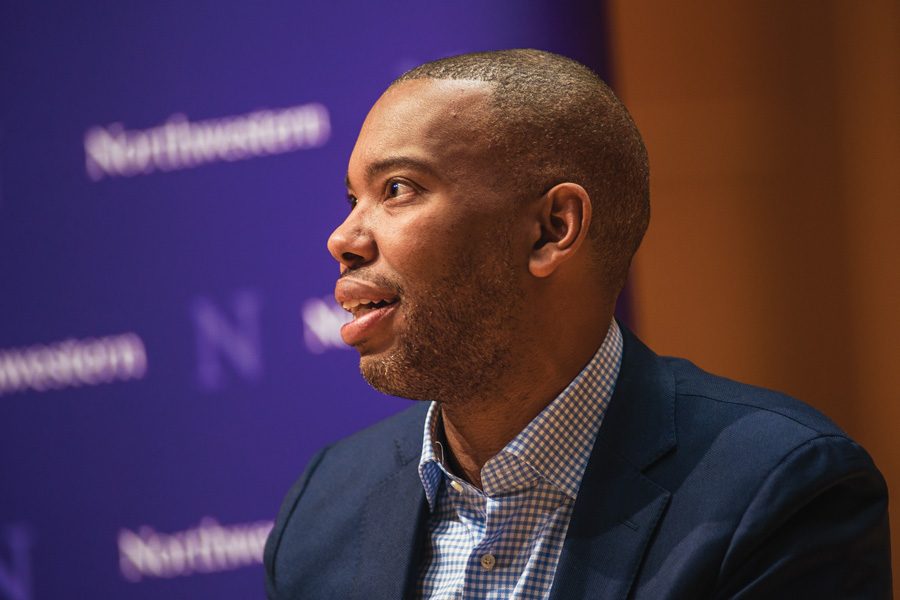 |
| Ta-Nehisi Coates |
Williams, who thinks we are wrong to "fetishize" race: " ... so long as we fetishize race, we ensure that we will never be rid of the hierarchies it impose." (Translation: Let's not lose our cool here.)
 |
| Thomas Chatterton Williams |
Both writers write in a long tradition of calls to conscience, I think: specifically, calls to the consciences of white people that have been put forth over the decades and centuries by black people as well as by other white people.
This leads me to suspect that the question of who among white people (such as myself) are racists and bigots, and who are not, amounts to which of us whites hears the calls to conscience and responds by moving in the direction of racial amity and justice.
In my youth, I stubbornly refused to hear and respond.
When civil rights advocates pushed the Supreme Court to declare school segregation unconstitutional in 1954, I was too young to notice. But I manifestly turned my head and shut my ears in 1963 when Martin Luther King gave his "I Have a Dream" speech at the March on Washington. I started to unfreeze only after I entered Georgetown University in 1965 and found that some of my white friends opposed my obduracy. Yet I continued to drag my feet, to one degree or another, for the next several decades. Old habits of thought die hard.
At the same time, my general direction of belief was increasingly anti-racist. The calls to conscience that were everywhere around me eroded most of my bigotry over time. I confess, however, that the nub of bigotry still exists in my soul and makes its presence felt from time to time.
My point here is that bigotry is not so much a state of mind as it is a direction of evolving belief. If you are white and your belief is evolving in the direction of racial reconciliation, you have the right to say you aren't a bigot.
We're now in an era in which the rise of the tea party and the response to Trump have re-legitimized a sort of reverse evolution on the part of what I hope is a minority of my fellow whites. For the rest of us, this is yet another call to conscience.


