The song came to mind after I read the op-ed column "Once upon a time, I was a gang member" by Washington Post columnist Colbert I. King this morning. King, who is black and was raised in Washington, tells how he was briefly a member of a street gang, the Midget Rag Mops.
King writes: "To me, being a Midget Rag Mop meant never having to worry about getting jumped on the playground or on the streets. It meant attracting glances from girls who otherwise wouldn’t have looked at me. It meant gaining a reputation as a young warrior, even if I couldn’t fight a lick."
When I read that, I wondered how the girls whose glances were attracted could tell the future Pulitzer Prize winner was in the Midget Rag Mops in the first place. Maybe he wore "gang colors"?
Colors, by that definition, are badges of group identity. We humans tend to slot ourselves into us-versus-them groups, no?
Race is seen, at least by racists, as a badge of identity. I'm white. If I encounter a black person, I can see by his or her face that we are of different racial identities. One of the hugest questions Americans face today is how we feel about the various "badges" of racial identity we wear and can never take off or hide: black, brown, yellow, or white skin; different colors and textures of hair; different languages and cultural identities.
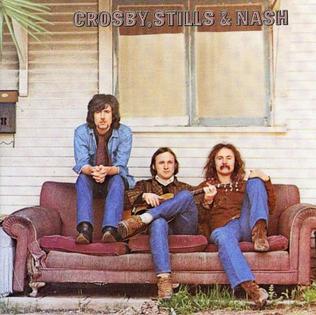
But as David Crosby, Paul Kantner, and Stephen Stills wrote in "Wooden Ships," there is one "badge" of human identity that does not create an us-versus-them divide: a smile.
Let's all try an experiment: make a point of smiling, whenever the occasion presents itself, at people of a different race or ethnicity than your own. Maybe we can learn to leverage the simple act of smiling into a cure for ethnic hatred and disharmony in America.
In New Orleans' Congo Square, during those years, people who were partly or wholly of black African ancestry gathered to sing, play musical instruments, and dance. Some were free, some were slaves. Their music often had been that which was brought to American shores by blacks migrating from the Caribbean ... and many of those very same Afro-Caribbean musical styles were actually African in origin.
Many Congo Square participants were "Creoles of color." Born in this country — as were many of the purely white people of Louisiana who were also called "Creoles" — Creoles of color had both white and black ancestry.
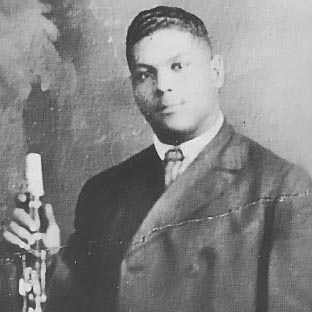
Sidney Bechet
Decades after the Civil War and the concurrent Emancipation of black slaves, New Orleans became the cradle of jazz. One of the early stars of New Orleans jazz was the clarinetist/saxophone player Sidney Bechet. Bechet was a Creole of color.
The musical traditions associated with Creoles of color have included the "Creole music" of the early 19th century, considered a kind of folk music today. Those traditions have included jazz. And, Powers points out, they continue to show up in today's soul and rap music.
In 2016, for example, Beyoncé Knowles released a hit song titled “Formation”:
"Formation" was, says Powers …
… an anthem aiming to inspire a new generation of civil rights activists whose first stirrings could be seen after Hurricane Katrina devastated many parts of New Orleans — and Congo Square — eleven years earlier … Beyoncé poses as a quadroon in a corset and a bounce dancer in booty shorts; she declares herself the inheritor of a Creole culture that is steeped in blackness.
Some translation may be needed here. A "bounce dancer" is someone who dances to the New Orleans-style hip hop music called "bounce" that originated in the 1980s. "Booty shorts" is another expression for "hotpants." A New Orleans "quadroon" was anyone whose ancestry was one-quarter African and three-quarters European. A "quadroon girl," says Powers, was someone of that ancestry who would seek to be partnered by white men at old New Orleans' dance halls and balls. She was accordingly an object of the white man's illicit desire for what was then considered "miscegenation."
The chorus of "Formation" includes:
My daddy Alabama, momma Louisiana You mix that Negro with that Creole, make a Texas bama
The reference to a “Texas bama” has to do with a derogatory term, used by citified African Americans, for rural blacks. It means, roughly, a “black hick” who has moved to the city. Beyoncé herself was born in the city of Houston and grew up to become one of the best-selling musical artists ever. She is, despite her city roots, in some sense a “Texas bama.” Her “momma,” Tina, is of Creole-of-color ancestry. Her “daddy,” Mathew, is a “Negro” — not, I’m guessing, of Creole ancestry — who was raised in Alabama.
Here in this song, Beyoncé is identifying her own great success with that of her family and, by extension, that of all members of her race as a race.
A prominent music critic called “Formation” “a statement of radical black positivity.” I think it's tremendously important that Beyoncé links that radical positivity with the deepest roots of African American music in places like New Orleans.
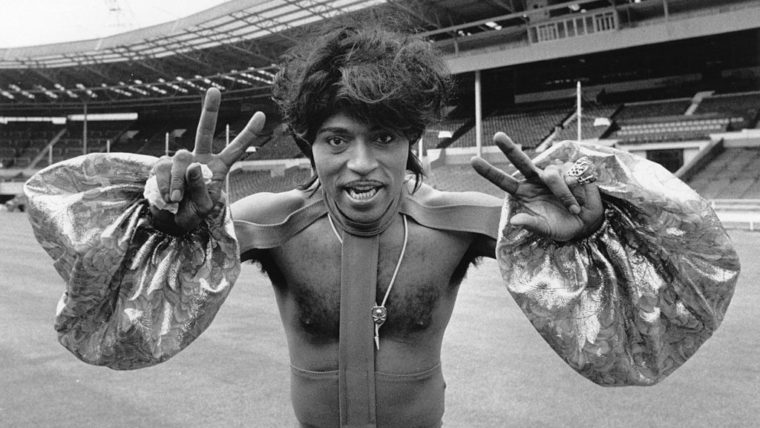
Did you know that the original lyrics of Little Richard's 1955-56 hit "Tutti Frutti" were dirty? The original lyrics referred to sex from the point of view a gay man (which Little Richard was and is, though he was not out of the closet then):
Tutti Frutti, good booty If it don't fit, don't force it You can grease it, make it easy Tutti Frutti, good booty If it's tight, it's all right And if it's greasy, it makes it easy
Cleaned up for public consumption, they became:
Tutti frutti, aw rooty … (repeated)
There's a book just out that sets this factoid in the context of (in the words of its subtitle) Love and Sex, Black & White, Body and Soul in American Music. The book's main title is (no surprise here) Good Booty. It's by Ann Powers, a music critic and correspondent at National Public Radio.
Powers was recently interviewed on the air by Joshua Johnson, host of "1A," about her excellent new book. That interview led me to begin reading the book itself. As of this point in time, I've managed to absorb the introduction and the first chapter, called "The Taboo Baby."
Why my interest in this subject? I'm developing a course that I'd like to teach at Osher Lifelong Learning Institute at Towson University. My "Ebony and Ivory" course will illustrate, using YouTube videos wherever possible, how African American music and mainstream popular music have intertwined all through American history.
Here's a video of a young Little Richard singing "Tutti Frutti" in the early days of television:
It illustrates something that Ann Powers emphasizes in her book: how so many African American musical styles are dance music. In her first chapter, she takes that history all the way back to 1805 New Orleans. It was in the years just after the U.S. acquired the Louisiana Purchase from the French, in 1803, that people of African descent, slave and free, would come to congregate in New Orleans' Congo Square to perform their music.
As the blacks, both slave and free, sang and danced in Congo Square, the whites looked on in sneaking admiration and, yes, a degree of lust. The music in Congo Square often involved dancing that had sexual overtones:
The illustration above is called "The Bamboula." A bamboula is, says Wikipedia, "a type of drum made from a rum barrel with skin stretched over one end. It is also a dance accompanied by music from these drums." The drum and the dance called the bamboula came to the melting pot of New Orleans from the Caribbean islands — specifically, from the country then called Saint-Domingue (and now called Haiti). Africa, though, was where that type of drum and its accompanying dance style came from originally.
The New Orleans "Creoles of color" had more than just the bamboula in their musical repertory. In general, "Creole music" consisted of "melodies, sometimes including dance-related instrumental accompaniments, sung in Louisiana French and Louisiana Creole [a language] by Louisiana Creole people of French, Spanish, Native [American], and/or African" descent. Anyone living in Louisiana who was born in America, not abroad, was termed a Creole. Those who were not of purely white descent were Creoles of color. The term "Creole of color" was most often used to describe one particular mixed-race demographic, a mixture of black and white.
Little Richard, though not himself a Creole, recorded "Tutti Frutti" in New Orleans, “just down the street from ... Congo Square.” In that city, he relied on a co-writer named Dorothy LaBostrie to help him clean up his originally sexually explicit lyrics. LaBostrie was a Creole, on her father's side.
The fact that a black man of uncertain sexuality, Little Richard, could have a hit record in the mainstream U.S. market ("Tutti Frutti" went to No. 17 on the Billboard Top 40 chart in early 1956) represented the sort of liberation from constraint and taboo that, to white teens, early rock 'n' roll stood for.
Powers sees that liberation as a continuation of what got started in Congo Square in the years following 1805. Music, dancing, racial mixing, sex, liberation from constraint and taboo — all these and much more merge together in the topic sentence of Powers' "The Taboo Baby" chapter: "Popular music gives shape, in time, to desire; and desire always crosses boundaries."