 |
| Ann Powers |
In New Orleans' Congo Square, during those years, people who were partly or wholly of black African ancestry gathered to sing, play musical instruments, and dance. Some were free, some were slaves. Their music often had been that which was brought to American shores by blacks migrating from the Caribbean ... and many of those very same Afro-Caribbean musical styles were actually African in origin.
Many Congo Square participants were "Creoles of color." Born in this country — as were many of the purely white people of Louisiana who were also called "Creoles" — Creoles of color had both white and black ancestry.
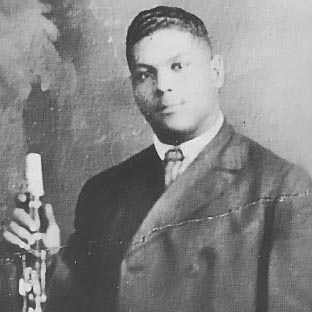 |
| Sidney Bechet |
The musical traditions associated with Creoles of color have included the "Creole music" of the early 19th century, considered a kind of folk music today. Those traditions have included jazz. And, Powers points out, they continue to show up in today's soul and rap music.
In 2016, for example, Beyoncé Knowles released a hit song titled “Formation”:
"Formation" was, says Powers …
… an anthem aiming to inspire a new generation of civil rights activists whose first stirrings could be seen after Hurricane Katrina devastated many parts of New Orleans — and Congo Square — eleven years earlier … Beyoncé poses as a quadroon in a corset and a bounce dancer in booty shorts; she declares herself the inheritor of a Creole culture that is steeped in blackness.
Some translation may be needed here. A "bounce dancer" is someone who dances to the New Orleans-style hip hop music called "bounce" that originated in the 1980s. "Booty shorts" is another expression for "hotpants." A New Orleans "quadroon" was anyone whose ancestry was one-quarter African and three-quarters European. A "quadroon girl," says Powers, was someone of that ancestry who would seek to be partnered by white men at old New Orleans' dance halls and balls. She was accordingly an object of the white man's illicit desire for what was then considered "miscegenation."
The chorus of "Formation" includes:
My daddy Alabama, momma Louisiana
You mix that Negro with that Creole, make a Texas bama
The reference to a “Texas bama” has to do with a derogatory term, used by citified African Americans, for rural blacks. It means, roughly, a “black hick” who has moved to the city. Beyoncé herself was born in the city of Houston and grew up to become one of the best-selling musical artists ever. She is, despite her city roots, in some sense a “Texas bama.” Her “momma,” Tina, is of Creole-of-color ancestry. Her “daddy,” Mathew, is a “Negro” — not, I’m guessing, of Creole ancestry — who was raised in Alabama.
Here in this song, Beyoncé is identifying her own great success with that of her family and, by extension, that of all members of her race as a race.
A prominent music critic called “Formation” “a statement of radical black positivity.” I think it's tremendously important that Beyoncé links that radical positivity with the deepest roots of African American music in places like New Orleans.
(More Good Booty posts to come later ... )


No comments:
Post a Comment